
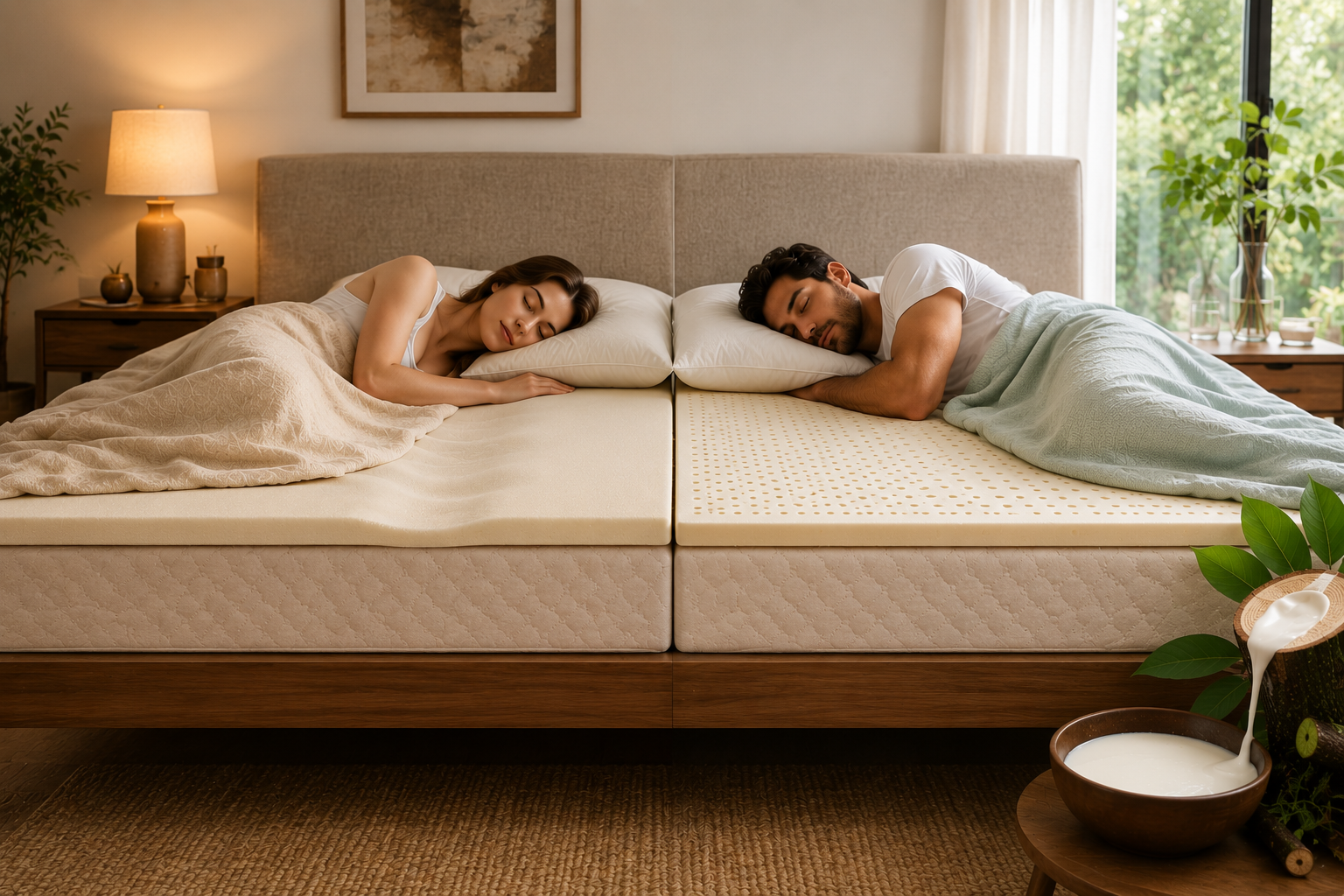
If you’ve started researching mattress toppers, you’ve probably noticed that almost every brand claims its product is the “best.” Memory foam brands praise pressure relief. Latex brands talk about natural comfort and durability. So which topper actually makes sense for your sleep? The answer depends on what matters most to you—cooling, back support, durability, chemical safety, allergy resistance, or long-term value.
Let’s compare Memory Foam and Natural Latex Toppers without marketing jargon.
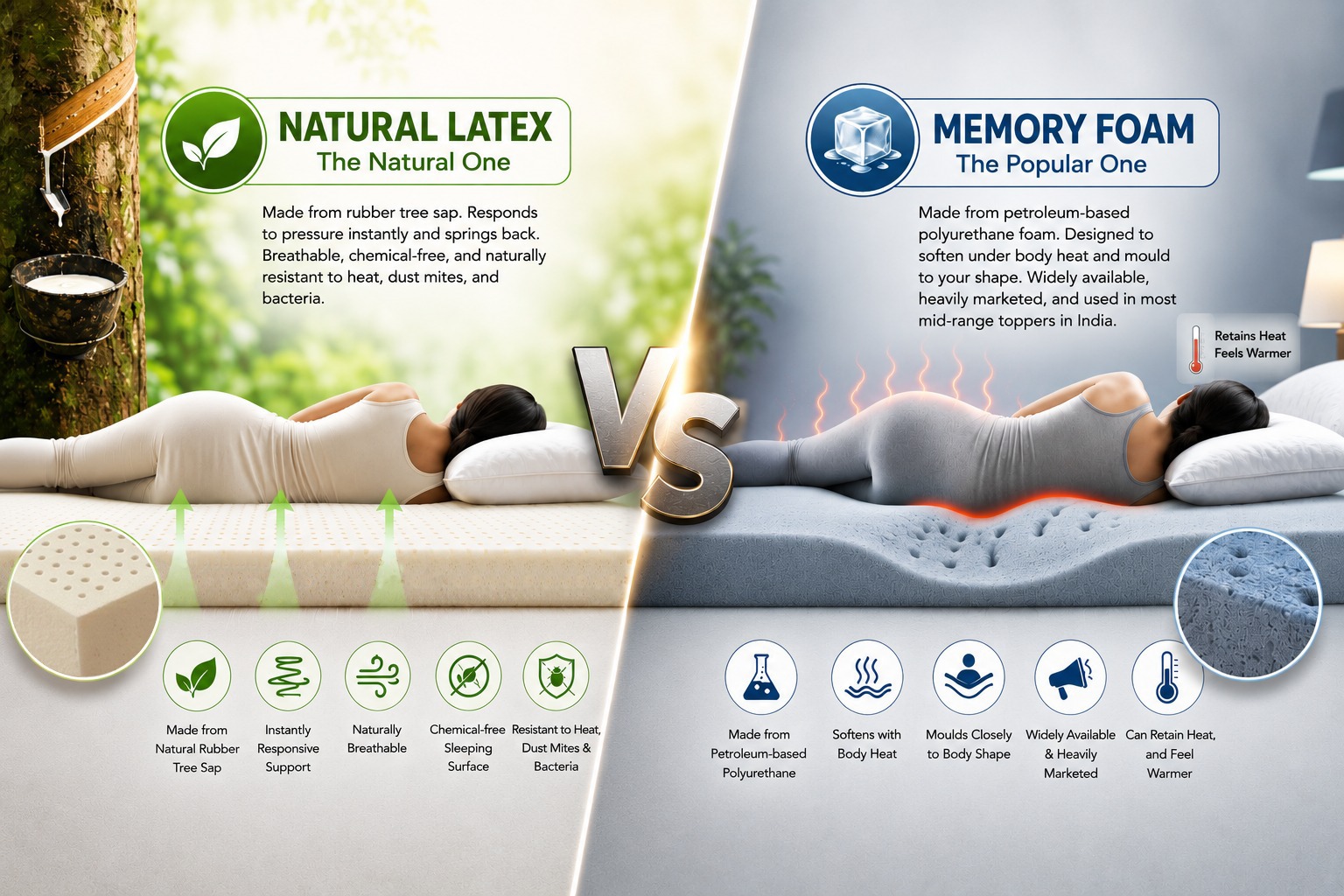
1. Sleeping Hot — Which One Keeps You Cool?
This is one of the biggest reasons people replace their topper.
| Natural latex has pin-core holes that allow continuous airflow. This helps dissipate body heat and moisture more effectively. | Many manufacturers add cooling gels or ventilation channels, but the core material still retains more heat compared to latex. |
2. Back Support — Which One Protects Your Spine?
Comfort matters, but proper spinal alignment matters more.
| Latex compresses only where pressure is applied while supporting surrounding areas. Instead of allowing the body to sink deeply, it keeps the spine in a more neutral position. | Memory foam contours closely to the body, providing excellent pressure relief and initial comfort. However, lower-density foam can soften over time, allowing hips and shoulders to sink too much and potentially affecting spinal alignment. |
3. How Long Does It Last?
A topper is only a good investment if it continues performing year after year.
| Natural latex is exceptionally durable, with a typical lifespan of 8–15 years, depending on quality and usage. Its highly resilient structure allows it to bounce back to its original shape even after years of regular use, helping maintain consistent comfort and support over the long term. | Most memory foam toppers typically last around 3–5 years, although premium versions may last slightly longer. Over time, memory foam tends to develop permanent body impressions, soft spots, and reduced support, which can affect both comfort and spinal alignment. |
4. Chemical Safety — What Are You Breathing All Night?
Most people spend nearly one-third of their lives in bed. The materials around you matter.
| Organic Natural latex is derived from rubber tree sap and doesn’t contains any synthetic ingredients. When paired with certified organic cotton covers, it creates a more natural sleep environment | Memory foam is primarily made from petroleum-based materials and may release a mild odor, known as off-gassing, when new. While certified foams are considered safe, some people may be sensitive to the smell or chemical emissions. |
5. Partner Movement — Will You Feel Every Toss and Turn?
If you share a bed, motion transfer can affect sleep quality.
| Latex also reduces motion transfer but remains more responsive and bouncy than memory foam. Some movement may still be noticeable. | Memory foam absorbs movement exceptionally well. When one partner changes position, much of that movement is isolated rather than transferred across the bed. |
6. Dust Mites and Allergies — Critical for India
Dust mites thrive in warm and humid environments, making this an important factor for Indian households.
| Natural latex is naturally resistant to dust mites, mold, and mildew, making it an excellent choice for allergy-prone sleepers. Its breathable structure helps create a cleaner and healthier sleep environment, particularly in warm and humid climates. | Memory foam can resist dust mites better than traditional fiber fillings, but it doesn’t naturally possess antimicrobial properties. |
7. Real Cost — Upfront Price vs Long-Term Value
Many buyers focus only on the purchase price. The smarter approach is to consider cost over the product’s lifespan.
Natural latex requires a higher upfront investment, but its exceptional durability and long lifespan make it a cost-effective choice over time. A quality latex topper can last for many years, while a memory foam topper may need to be replaced multiple times during the same period. | Memory foam is more affordable upfront and can be a good short-term solution for budget-conscious buyers. However, its shorter lifespan means it may need replacement sooner, increasing long-term ownership costs. |
Which One Is Right for You?
Choose a Memory Foam Topper If:
- You want the lowest upfront cost
- You love a deep body-hugging feel
- Motion isolation is your highest priority
Choose a Natural Latex Topper If:
- You sleep hot
- You want better spinal support
- You suffer from allergies
- You prefer natural materials
- You sleep in a cooler environment
- You want a topper that lasts for many years
- You are looking for long-term value rather than the lowest purchase price
Final Verdict
Memory foam became popular because it delivers immediate comfort at an affordable price. For many sleepers, that’s enough. But when you compare cooling, durability, support, allergy resistance, and long-term value, natural latex consistently comes out ahead. For hot climates like India, where heat buildup, humidity, and durability are major concerns, a high-quality natural latex topper often provides a healthier and more comfortable sleep experience for years to come.
The real question isn’t which topper is cheaper today. It’s which topper you’ll still be happy sleeping on five years from now.

Leave a Reply